
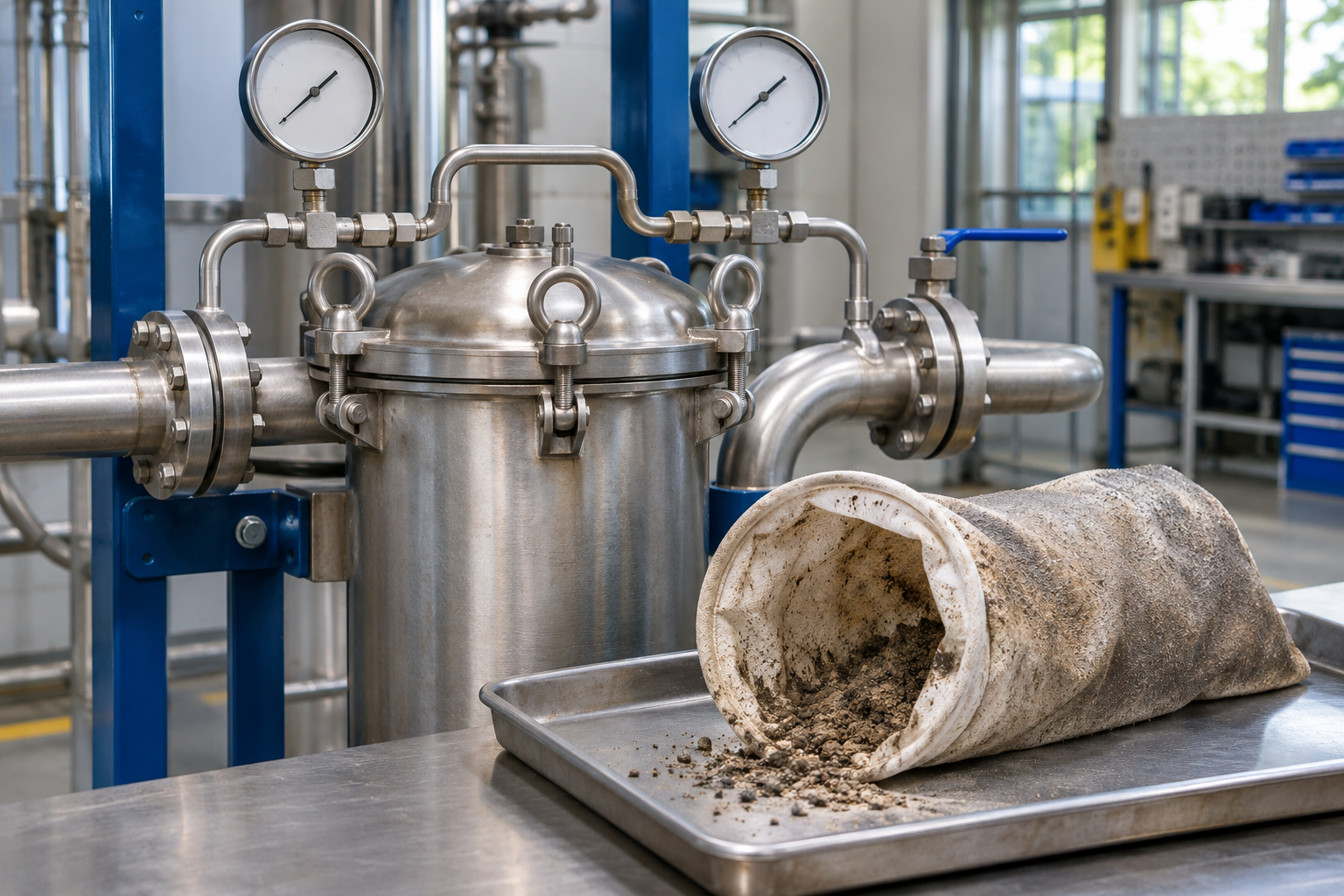
There is no single pressure value that determines whether every filter can continue running after an alarm. First check what triggered the alarm, whether the measurement is reliable, the limits for the installed equipment, the process fluid and the possible effect on downstream equipment. Follow the equipment documentation and site procedure. If the alarm comes with leakage, unusual vibration, a sharp flow drop or operation beyond a stated limit, use the applicable site stop or emergency procedure.
Confirm what the instrument is measuring
Check the pressure tap locations, instrument range and units, calibration status and recorded signal. Compare the reading with available upstream and downstream gauges. Note whether the bypass valve, pump speed, flow rate or process conditions have changed. A questionable instrument reading should be investigated; a normal-looking filtrate does not by itself show that the equipment is safe to operate.
Use the limits for the installed equipment
Consult the manual and project settings for the exact model. Confirm the permitted differential pressure, housing pressure rating, alarm logic and any interlocks. The response, including adjustment or shutdown, should be carried out by authorised personnel under the applicable procedure. If inspection is required, isolate and depressurise the equipment as instructed before checking the bag, basket or cartridge.
Do not raise an alarm limit, bypass an interlock or open a pressurised housing just to clear an alarm. Record the alarm time and reading, flow and process conditions, response taken and the equipment condition after recovery. Parker's filter instructions, for example, call for differential-pressure checks at regular intervals on a specified assembly; the correct monitoring and response depend on the particular equipment and application.
Investigate repeated alarms
If the alarm recurs, review changes in particle loading, flow, filter area, upstream treatment and the pressure instrument itself. Compare the records before increasing replacement frequency or changing the filter rating. A persistent alarm can have more than one cause, so the equipment and process owners should confirm the diagnosis and corrective action.
Keep a useful alarm history
For each event, record the alarm code and time, equipment identification, flow, pump and valve conditions, recent media changes and operator response. If the system is stopped for inspection, follow the site permit and isolation process and retain inspection photos where appropriate. Record when the alarm cleared, whether media was changed and whether readings returned to their normal range. Keep the original reading in the log rather than recording only that the alarm was reset.
Filtration equipment inquiries
Shenzhen Guangxiangyu Technology Co., Ltd., established in 2009 in Longgang District, Shenzhen, supplies industrial liquid filtration equipment and water-treatment filter elements, including bag filter housings, precision filters, filter bags and cartridges. For an equipment inquiry, share the model, alarm record, flow, process liquid and filter-media information with Liu Nan, Sales Manager, at LiuNan2553@gmail.com. Allowable operating values must be confirmed from the specific product documentation and project settings.
See our bag filter housings, precision filters, or contact page.
Technical reference
- Parker, DFBO Dual FBO Filter Operation and Maintenance Instructions. This manual describes regular differential-pressure checks for the specified assembly; it does not set a universal alarm limit for other filters.