
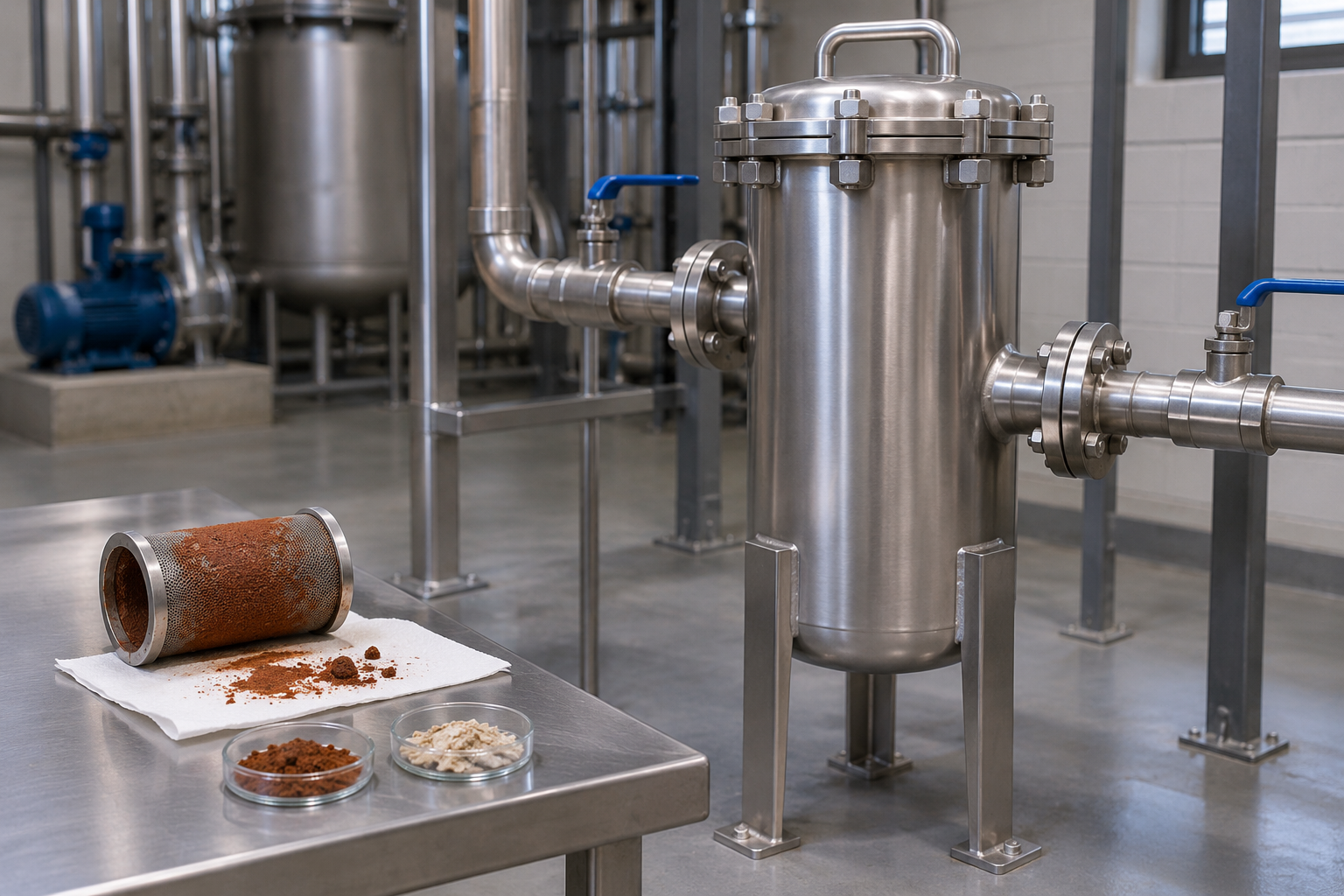
After a long shutdown, confirm what happened to the process and the filter before restarting. Check whether liquid remained in the housing, whether the media was stored as specified, and whether the housing, seals, valves and instruments are in suitable condition. The restart sequence depends on the equipment and process; follow the applicable manual and site procedure.
Establish the shutdown condition
Record how long the system was idle, whether the housing was drained, what liquid may remain, and the temperatures and storage conditions during the shutdown. Check whether cleaning or maintenance was carried out and whether the filter bag, cartridge and seals were stored according to their product instructions. If the internal condition is unknown, have the responsible site personnel assess the equipment before deciding whether inspection or replacement is needed.
Check the equipment against its documentation
Inspect the housing, supports, connections and instruments for visible damage or signs of leakage. Confirm that the installed media matches the specified model and is correctly seated. Review valve positions, vent and drain arrangements, downstream readiness and any interlocks. Priming, venting and start-up steps are equipment- and process-specific, so use the instructions for the installed unit rather than a generic sequence.
When the system is returned to service, observe it for leakage, unusual vibration, and changes in flow or pressure. Record initial readings and any abnormal conditions. Parker's housing instructions, for example, require the housing to be fully depressurised and drained before dismantling; consult the instructions for the actual housing before any maintenance work.
Treat retained liquid and connected pipework carefully
If liquid may have remained in the housing, document its identity and residence time where known. If the housing was drained, note whether it was cleaned and dried, and where the media was stored. Do not touch unknown residues. Where the fluid is hazardous or the housing is connected to other systems, follow the site's isolation, permit and supervision requirements. Never open or start equipment while its condition is uncertain.
Compare restart readings with a baseline
Once the authorised restart procedure is underway, record the initial flow, pressure or differential pressure, liquid appearance and visible leakage. Compare these observations with normal operating records and the equipment limits. If readings or operating conditions are abnormal, stop and investigate in accordance with the site procedure. High-pressure, high-temperature and hazardous-fluid systems require the applicable safety controls.
Liquid filtration equipment inquiries
Shenzhen Guangxiangyu Technology Co., Ltd., established in 2009 in Longgang District, Shenzhen, supplies industrial liquid filtration equipment and water-treatment filter elements, including bag filter housings, precision filters, filter bags and cartridges. For a product inquiry, share the equipment model, process liquid, shutdown period and maintenance history with Liu Nan, Sales Manager, at LiuNan2553@gmail.com. Restart decisions must be confirmed against the equipment documentation and site procedure.
See our bag filter housings, precision filters, or contact page.
Technical reference
- Parker, Filter Housing Installation, Operation and Maintenance Instructions. The instructions cover depressurising and draining a housing before dismantling; the procedure varies with equipment and application.