
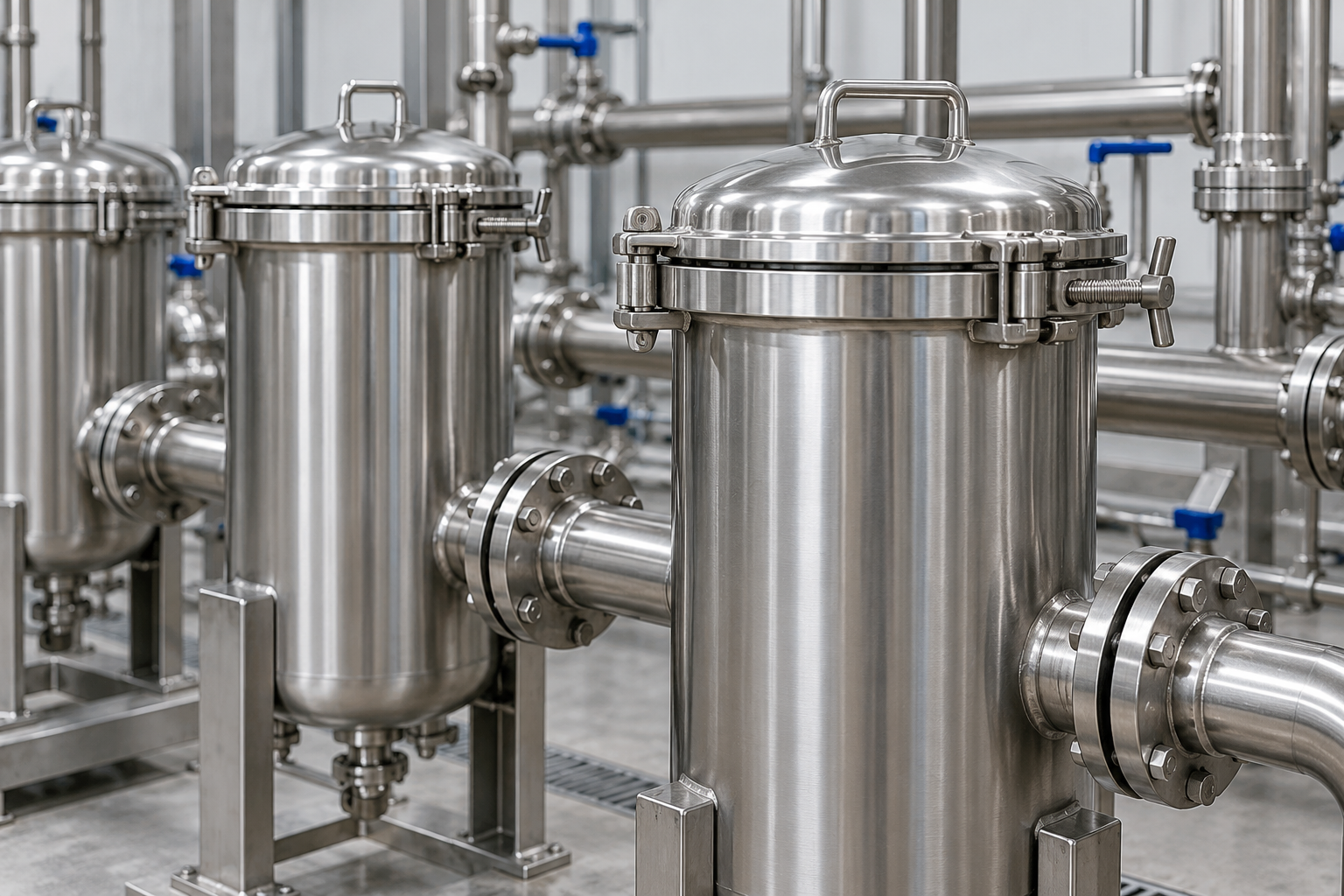
A quick-opening design can make the inside of a filter housing easier to access. It does not, by itself, eliminate shutdown, isolation, depressurization, draining or the site’s maintenance procedure. Whether it suits frequent bag changes depends on why the bags are changed, the process schedule, the liquid residue and the access available to trained operators.
Before changing housing style, establish why change-outs are frequent. A high solids load, a change in feed quality, an unsuitable bag specification, inadequate filter area, bypass or a change in operating flow can each contribute. A more accessible cover may affect maintenance access; it does not automatically extend bag life or correct a filtration problem.
Diagnose the change-out pattern first
Record the time in service, volume processed, bag model and rating, pressure trend, material collected and process conditions at each change. Note when feed composition, flow or production settings change. This history can help distinguish a normal maintenance requirement from a new operating issue.
If frequent service is an expected part of production, estimate the full work period for each change. Include stopping the process, confirming isolation, releasing pressure, draining and collecting residue, opening the cover, inspecting the basket, replacing the bag, closing the housing and returning the system to service. Compare that same scope when evaluating a different housing design.
Compare the complete opening and service arrangement
Quick-opening mechanisms differ between models. Before ordering, check the equipment’s rated conditions, seal materials, cover-opening method, available clearance, bag and basket removal path, replacement parts and the manufacturer’s specified opening and closing sequence. Review the installation drawing against the pipework, overhead clearance and maintenance aisle.
For hot, corrosive, flammable or otherwise hazardous liquids, include residual liquid collection, cleaning, waste handling and the site’s personal protective equipment requirements in the job plan. The spent bag may retain process liquid or solids, so determine how it will be handled and disposed of under the site procedure.
Treat depressurization as a required service step
Before service, follow the manual for the installed filter and the applicable site procedure. Stop the equipment, isolate the relevant connections, release pressure, drain the vessel as directed and verify the safe condition before opening. A gauge reading or one valve position should not replace the specified isolation and zero-pressure checks. Never open a pressurized filter housing or bypass its safety requirements.
Eaton’s bag filter housing manual states that the filter must be shut down and pressure released before work, and that the housing manual should be followed. It also warns that some covers may be heavy and should be opened and closed slowly. The exact mechanism and safe procedure vary by model; use the documentation for the equipment installed at the site.
Decide whether the design fits the maintenance plan
Compare the measured change-out time, required crew, tool and lifting needs, spare-part availability, bag supply and production interruption. Confirm that operators can reach and remove the cover safely without moving unrelated equipment. If the current bag life is unexpectedly short, investigate the cause before assuming that a faster cover is the right remedy.
Bag filter products and inquiries
Shenzhen Guangxiangyu Technology Co., Ltd. supplies stainless steel single-bag, multi-bag and quick-opening bag filter housings, together with compatible filter bags and other filtration products. For an inquiry, provide the process liquid, operating temperature and pressure, change-out frequency, existing bag specification, site photos and service clearances. Confirm the final configuration and procedure against the specific equipment documentation.
See our bag filter housings and filter bags. Contact Liu Nan, Sales Manager, at LiuNan2553@gmail.com.
Technical reference
Eaton Bag Filter Housing Installation, Operation and Maintenance Manual. Its instructions apply to the equipment models covered by that manual; follow the operating and safety instructions for the housing installed at your facility.