
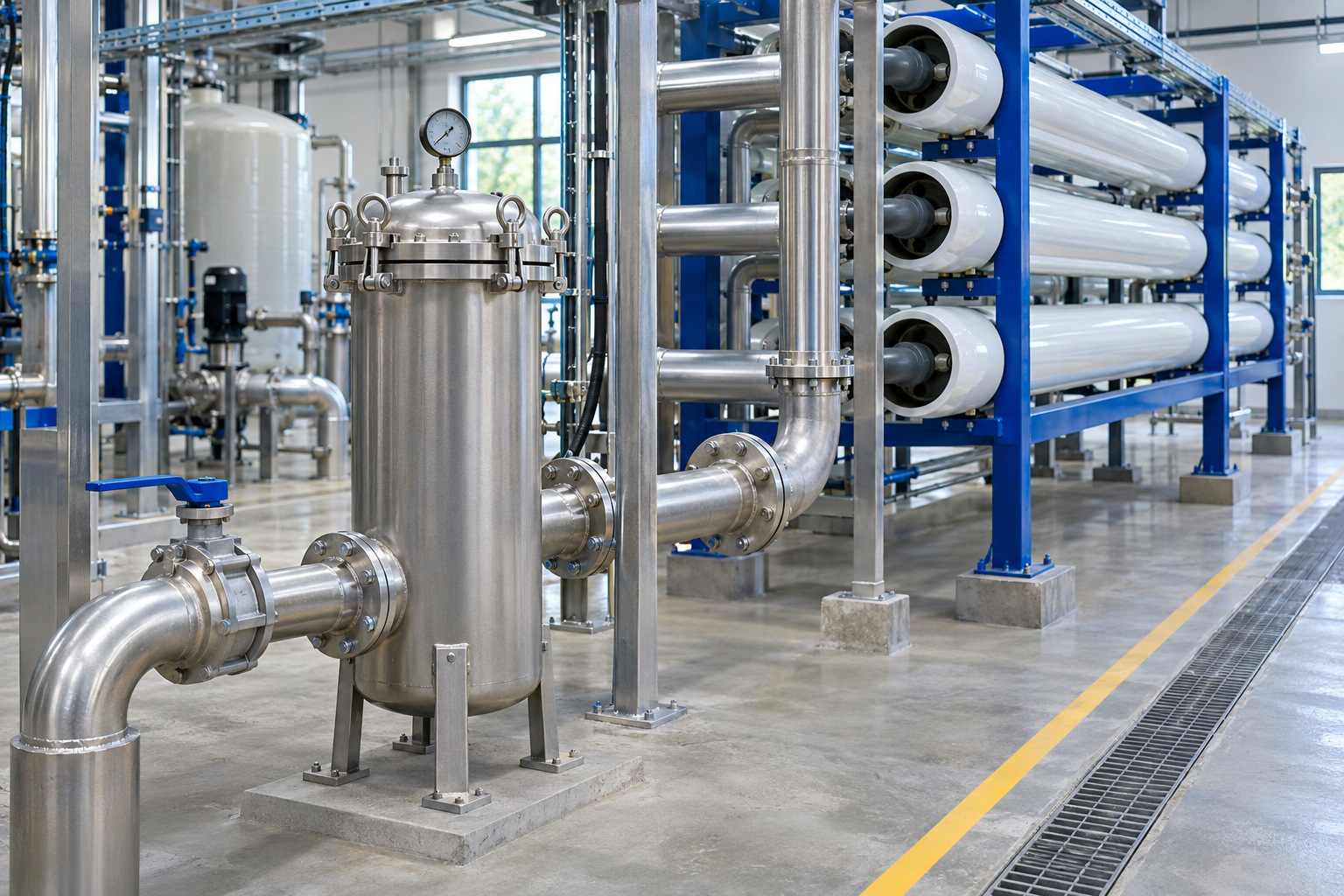
Before selecting a cartridge filter upstream of an RO system, confirm the particle-control objective, feed flow range, pressure and temperature limits, sampling method and acceptance basis with the membrane system designer. Then match the cartridge construction, filtration area and housing to the application. Requirements can differ with the membrane, pretreatment train and feedwater, so data from another project should not be copied without review.
Gather the system-side information
Collect raw-water and pretreated-water analyses, normal and peak flow, continuous operating hours, pump discharge conditions, pipe connections and available installation space. Ask the system designer what task the cartridge filter is expected to perform, how the rating is defined, what pressure-drop or replacement criterion applies, and whether a standby or changeover arrangement is required. If water quality varies, provide representative results from different dates and operating conditions.
Match the cartridge and housing as one assembly
Confirm that cartridge length, end connections, sealing arrangement, quantity and material match the housing. Check the clearance needed for replacement, the approved venting and draining arrangement, and spare-part availability. Make sure the product data corresponds to the proposed model. After start-up, record flow, pressure, replacement time and relevant downstream test results so the original design assumptions can be reviewed.
Include normal, peak and start-up conditions
Ask the system designer for normal and peak flow, start-up conditions, feed turbidity or particle data, temperature, pressure and water-quality variation. Confirm the permitted differential pressure and the sampling and acceptance method. Mark missing data as pending instead of basing the housing and cartridge quantity on one instantaneous measurement.
The DuPont FilmTec manual provides membrane-specific guidance for feedwater quality and operating conditions. Its published values apply to the stated membrane guidance, not automatically to every RO element or project. The membrane supplier should confirm the applicable limits for the selected system.
Keep a dated record of the assumptions
Organise feedwater data as a timeline rather than sending only one laboratory report. Start-up, shutdown, cleaning and a change of water source may affect the loading on the cartridge. Confirm whether the filter must run continuously, whether standby changeover is needed and what maintenance window is available. Once the system designer has reviewed these inputs, the cartridge and housing configuration can be finalised against the selected product data.
Precision filtration inquiries
Shenzhen Guangxiangyu Technology Co., Ltd., established in 2009 in Longgang District, Shenzhen, supplies precision filter housings, cartridges, bag filter housings and filter bags. For an RO prefilter discussion, share pretreatment water data, RO system requirements, flow profile and connection details with Liu Nan, Sales Manager, at LiuNan2553@gmail.com. Membrane feed limits and acceptance requirements should be confirmed by the system designer.
See our precision filters, filter cartridges, or contact page.
Technical reference
- DuPont FilmTec Reverse Osmosis/Nanofiltration Membranes Technical Manual. This manual identifies feedwater parameters and operating considerations for FilmTec membrane systems; verify limits for the specific membrane and system design.