
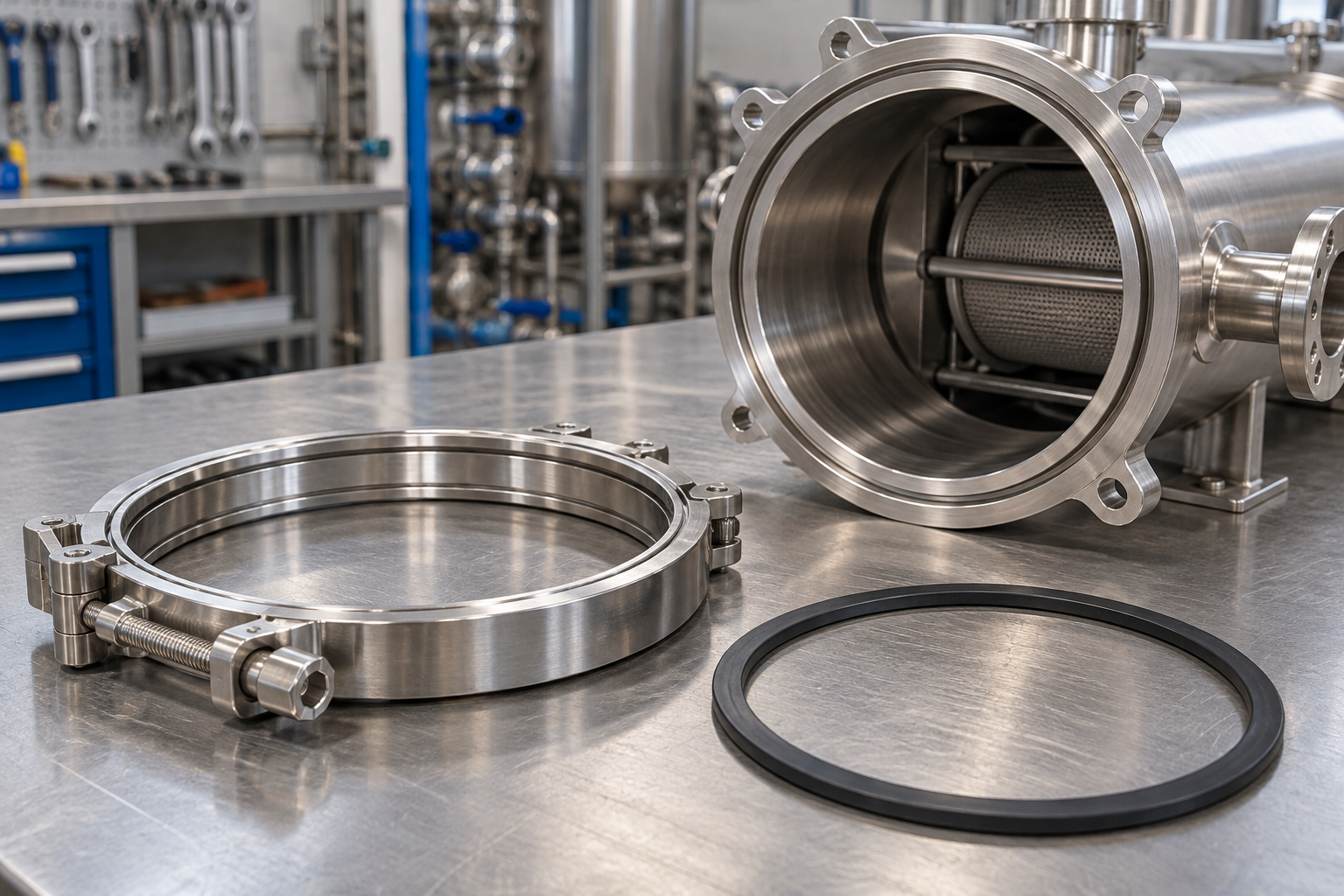
Choosing between 304 and 316L for a filter housing requires the actual liquid conditions, not only a broad label such as “water” or “acid.” Composition, concentration, temperature, cleaning chemicals and operating time can all matter. The basket, connections, fasteners, seals and filter media should also be checked because they may contact the process liquid.
304 and 316L are material grades, not universal promises of corrosion resistance. Outokumpu’s stainless steel guidance notes that corrosion behaviour can depend on the chemical environment, pH, temperature, surface finish, product design, fabrication and maintenance. Its corrosion tables also request the chemical environment and temperature when assessing a grade. These are reasons to review the real service conditions rather than choose from a grade name alone.
Prepare the liquid and site information
Before asking for a selection, collect the known composition or analysis and the concentration range. Include normal and peak temperature, continuous or intermittent operating time, cleaning agents, process additives and the liquid left in the housing during shutdown. For a recirculating process, note makeup, replenishment and normal operating fluctuations.
Describe the installation environment as well as the process liquid. Indoor or outdoor exposure, humidity, salt spray, condensation, deposits and liquid trapped around joints can affect exposed surfaces and connections. State whether the housing is insulated and how it is cleaned or inspected.
| Information | What to include |
|---|---|
| Liquid | Composition, concentration range, contaminants and additives |
| Temperature | Normal, peak and cleaning temperatures |
| Operating pattern | Run time, shutdown state and any retained liquid |
| Site conditions | Indoor/outdoor, humidity, salt exposure and deposits |
| Assembly | Shell, basket, nozzles, fasteners, seals and media |
Check every wetted component
Ask the supplier to identify the material for the pressure-retaining shell and each relevant wetted part. A shell with a specified grade does not establish that a gasket, filter bag, cartridge, coating or fastener is compatible with the same liquid. Confirm the exact product configuration and request documentation for the supplied components when required by the application.
For a critical process or an unfamiliar chemical, have the responsible materials or process engineer review the data. Published corrosion tables can help with initial screening, but the design and actual operating conditions still need to be considered. A controlled evaluation may be appropriate where the available data do not resolve the question; a short visual check alone does not establish long-term suitability.
Keep specifications and maintenance aligned
Write the agreed material requirements into the purchase specification, drawing, acceptance documents and spare-parts list. At delivery, compare the nameplate and traceability records with the agreed scope. If the process later changes its cleaner, concentration or temperature, review whether the original material selection still applies.
See our guide to filter housing material compatibility for a broader checklist of wetted components and operating conditions.
Filter products and inquiries
Shenzhen Guangxiangyu Technology Co., Ltd. supplies stainless steel bag filter housings, precision filter housings, filter bags and cartridges. For a material inquiry, share the liquid information, temperature, concentration, cleaning conditions and wetted-part requirements. The specific equipment data and service conditions must be reviewed; this article does not certify 304 or 316L for a particular chemical.
See our bag filter housings and precision filters. Contact Liu Nan, Sales Manager, at LiuNan2553@gmail.com.
Technical references
Outokumpu: What Makes Stainless Steel Corrosion Resistant? and Outokumpu corrosion tables. Use product-specific material data and qualified engineering review for the actual service conditions.