
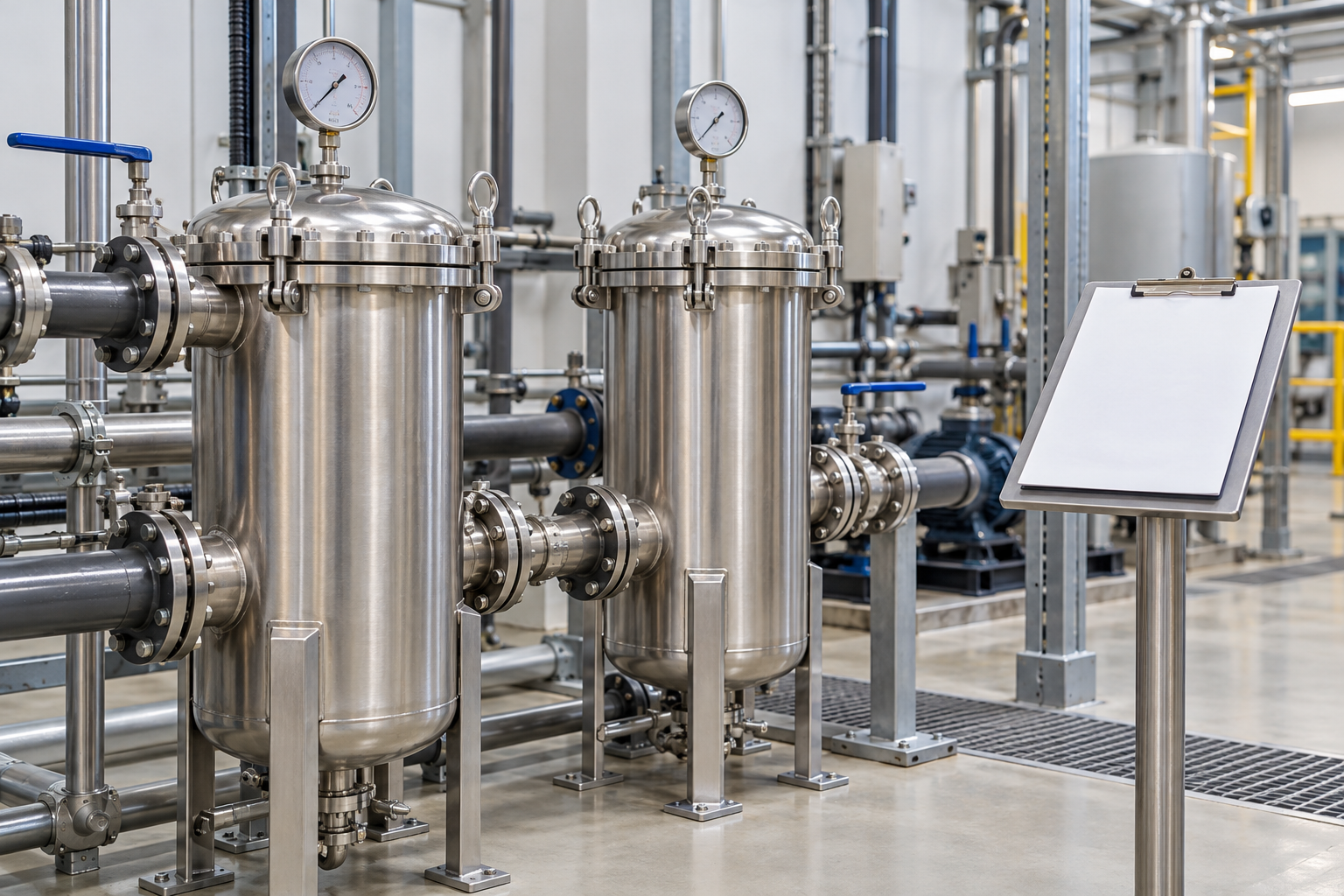
A pressure log is useful for spotting trends only when readings, measurement points and operating conditions are recorded consistently. A practical shift record can be short: identify the filter and media, record inlet and outlet pressure, note flow or pump state and temperature, and capture any process changes or maintenance actions.
Do not use a log as a substitute for the operating or replacement limits in the filter and media documentation. The purpose of the record is to show what changed and under which conditions, so the responsible team can investigate it.
Daily log fields
| Field | What to record |
|---|---|
| Date and time | Use a consistent shift or inspection time |
| Filter identity | Equipment ID, model and measurement point |
| Consumable | Bag or cartridge model and installation or replacement date |
| Process conditions | Liquid or production batch, temperature and run mode |
| Pressure | Inlet and outlet readings in the same units; calculate the difference if both are measured |
| Flow and pump state | Measured flow if available; otherwise record verifiable pump frequency or running units |
| Valves and observations | Relevant bypass and control-valve positions, leakage, vibration or outlet changes |
| Maintenance action | Cleaning, replacement, shutdown, inspection and operator |
Differential pressure across the same filter is calculated as inlet pressure minus outlet pressure. Donaldson’s hydraulic filtration guide uses this definition for its products; for a liquid process, follow the measurement points and units specified for the installed filter. A pressure reading on only one side is still useful to record, but it is not the filter’s differential pressure.
Make readings comparable
Confirm the location, range, units and identification of both pressure instruments. Record which gauge is upstream and which is downstream. If an instrument is serviced, replaced or found to be faulty, note the date so readings from different instruments are not treated as one uninterrupted trend.
Take routine readings at similar flow, valve position, pump arrangement and liquid conditions where practical. If the operating condition changes, record it. A batch change, replenishment, cleaning step or pump-frequency adjustment may affect the reading and should be visible in the log.
After installing new media and reaching stable operating conditions, record a reference set for that configuration. Do not directly compare readings taken at different measurement points, in different units or under materially different flow conditions. If a reading changes unexpectedly, first confirm the instruments and valve state, then investigate according to the equipment documents and site procedure.
Review trends without inventing a universal limit
Review the log weekly or monthly alongside media service time, flow, process conditions and replacement reasons. Look for repeated patterns that the responsible maintenance or process team can investigate. If several shifts share the equipment, consistent field names and instructions usually help more than adding many fields that operators cannot fill reliably.
Set inspection frequency, alarms and replacement actions using the equipment documentation, media requirements and process objectives. There is no single pressure value that applies to every filter, medium and liquid.
For more context on establishing an operating reference, see our filter pressure baseline guide.
Filter products and inquiries
Shenzhen Guangxiangyu Technology Co., Ltd. supplies bag filter housings, precision filter housings, filter bags and cartridges. When discussing monitoring or selection, share the equipment model, consumable, measurement points and operating record with Liu Nan, Sales Manager, at LiuNan2553@gmail.com. Instrument configuration and maintenance limits should be confirmed against the equipment documentation and design requirements.
See our bag filter housings and precision filters.
Technical reference
Donaldson Hydraulic Filtration Product Guide, which defines differential pressure as inlet pressure minus outlet pressure for the hydraulic filters it covers. Confirm the measurement basis for your own filter and application.