
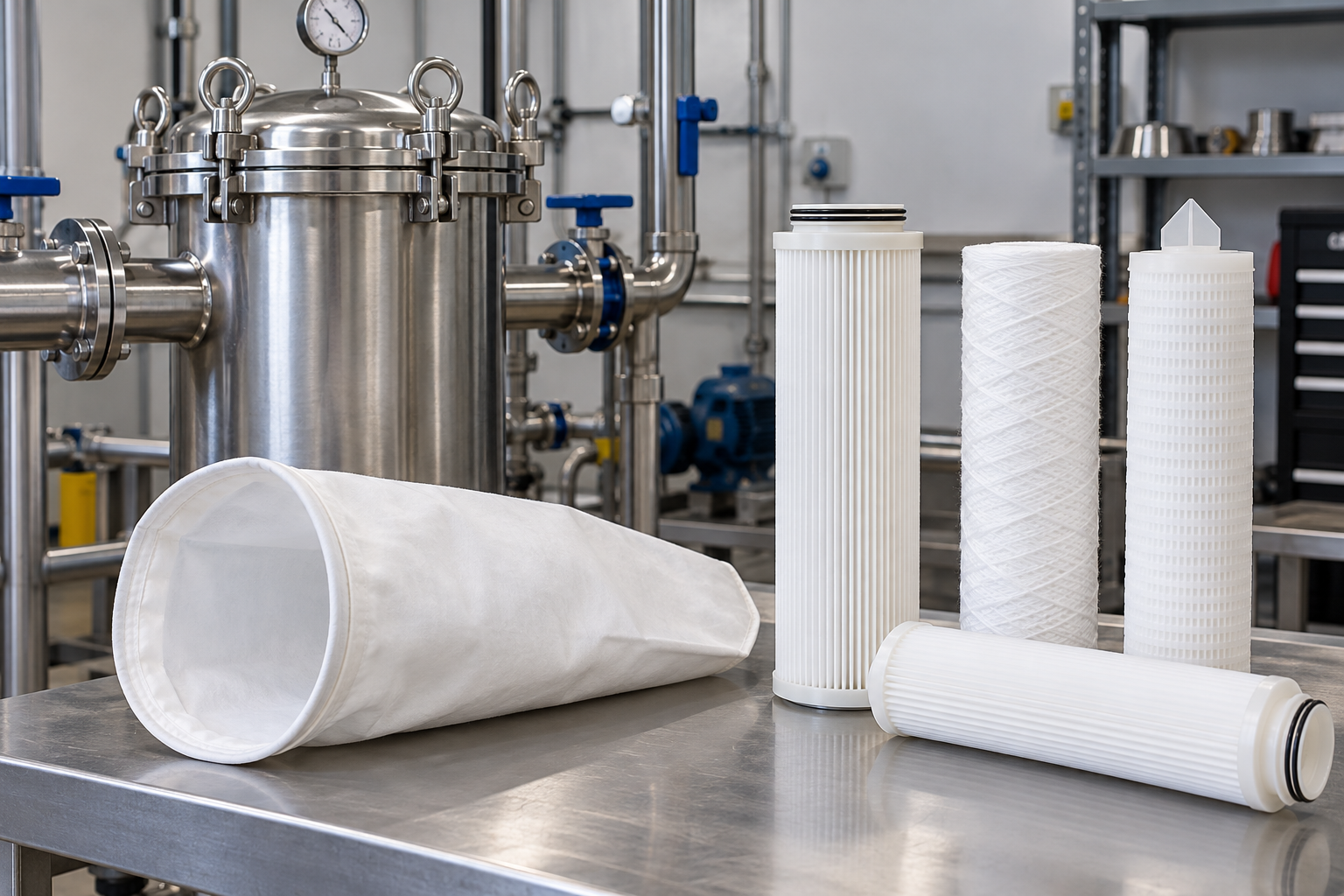
A stable pressure difference does not, by itself, prove that the filter media is clear. Flow may also be affected by the pump, valves, pipework, gas in the line, instrument condition, measurement points or a bypass arrangement. Confirm how the readings were taken, then trace the system from the supply side through the filter and downstream.
Confirm that the readings are trustworthy
Check the flow meter’s range, units, condition and recent calibration record. Compare readings taken using the same method and at a similar point in the operating cycle. If flow is not measured by an instrument, do not treat pump sound or a visual estimate at an outlet as a precise flow reading.
Review the inlet and outlet pressure gauges: their locations, ranges, condition and units. A stuck pointer, blocked pressure tap or gauge with a range too broad for the observed change can make the displayed difference unhelpful. Confirm that the readings are from the filter itself rather than across a longer section of the process line. If the instruments cannot be reconciled, ask qualified maintenance personnel to inspect them.
Record pump speed or frequency, which pumps are operating, valve positions and downstream demand. Compare the current setup with the conditions recorded when the flow was normal. A change in pump inlet conditions, drive operation, or an upstream strainer can affect supply to the filter.
Trace valves and pipework
Use the process drawing to check inlet and outlet isolation valves, any bypass valve and downstream control valves against their intended positions. Look for an obstructed line, a temporary blind or a changed connection that could restrict the flow. Gas trapped in a line can also affect stable operation; vent only through the equipment’s approved procedure. Do not loosen a pressurized connection to investigate.
Where readings are available at the pump and on both sides of the filter, compare them together. This can help identify whether the change appears at the supply, across the filter, or farther downstream. Pressure changes across a pump or process train should not be mistaken for differential pressure across the filter alone.
Inspect the filter after safe isolation
The filter media may still need inspection even when the displayed differential pressure is stable. Check that the bag or cartridge model is correct, installed in the intended direction and seated as specified. Review the sealing surfaces, support basket and any signs of bypass or damage. Confirm whether the pressure taps are close to the filter and remain clear.
Before opening the housing, stop the system, isolate, release pressure and drain as instructed by the installed equipment manual and site procedure. Preserve the removed media and record the findings. Do not use an online opening or venting step that is not specified for the equipment.
Keep the investigation orderly
Log the time of the change, previous and current flow, pump state, valve positions, inlet and outlet pressure, gauge identification, filter model and any process changes. Check instruments and measuring points first, then pump and valves, then the connecting line and filter internals. Change one condition at a time and record the result so the cause remains traceable.
For a method to compare the readings across one filter, see our guide to building a filter pressure baseline.
Filter products and inquiries
Shenzhen Guangxiangyu Technology Co., Ltd. supplies bag filter housings, precision filter housings, filter bags and cartridges. For a flow issue, share the equipment nameplate, piping photos, pump and gauge details, operating record and installed consumable model with Liu Nan, Sales Manager, at LiuNan2553@gmail.com. Site troubleshooting should be performed by personnel responsible for the equipment.
See our bag filter housings, precision filters and filter cartridges.
Technical reference
Eaton Filter Cartridge Manual. Use the measurement and service instructions for the specific filter and instruments installed at your site.