
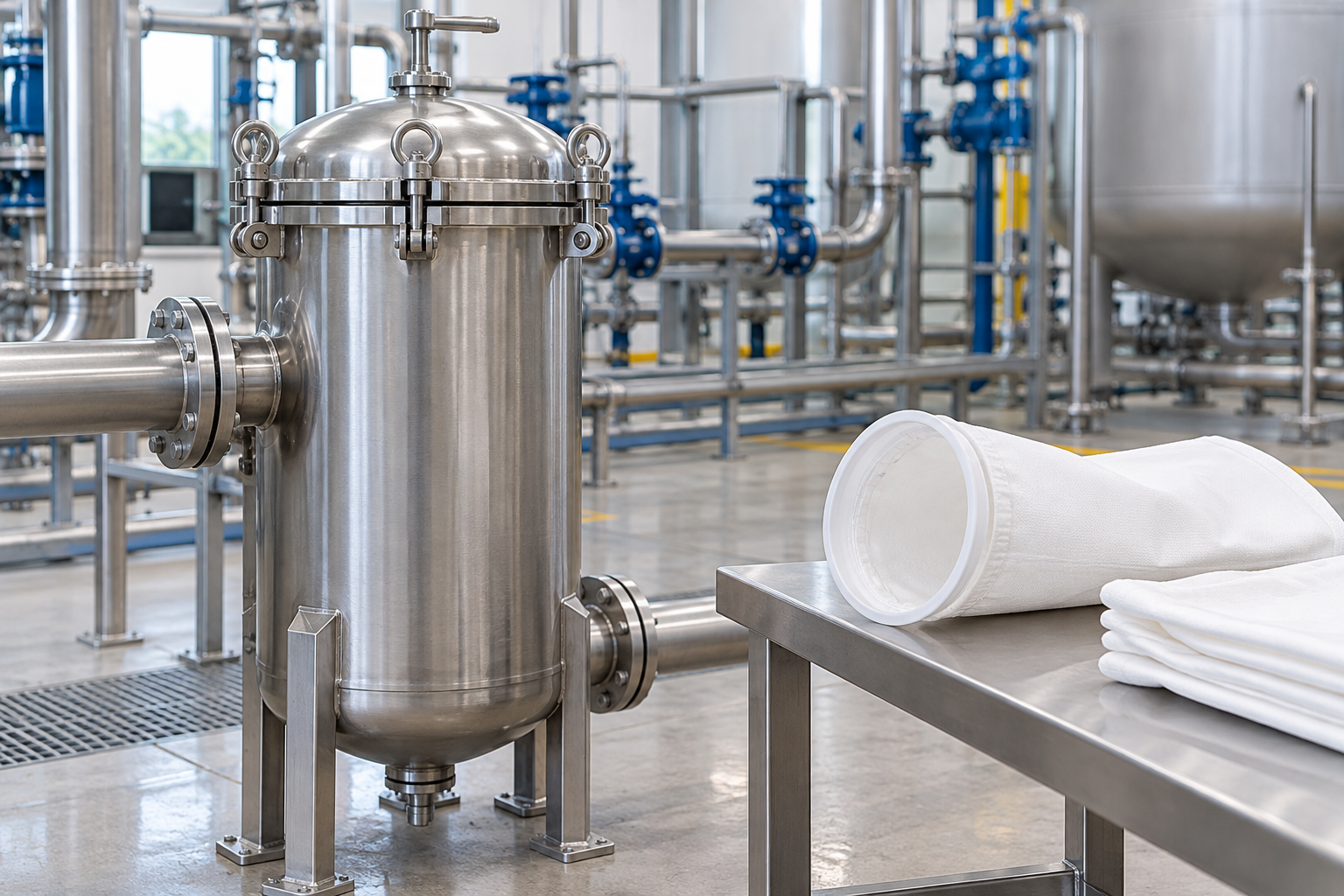
A finer rating is not automatically a better choice. First define the particles or downstream requirement that matter, then compare the supplier’s rating definition, test evidence, media construction, flow conditions, pressure loss and maintenance cost. A rating that is too coarse may miss the process objective; a finer medium may add resistance or require more frequent service in some operating conditions.
Define the filtration objective
Describe the particle type and size range to control, the relevant measurement, and what the filter is intended to protect: a pump, a downstream cartridge, a membrane system or a production step. If the objective is unclear, begin with representative sampling or a suitable particle analysis. Ordinary particle bags and cartridges may not address dissolved salts, hardness or microbiological targets; those may require different treatment methods and verification.
Confirm what the rating means
Ask the supplier which test method supports the stated micron value, what efficiency or retention result is reported, and which exact consumable model the data describes. Eaton’s technical article on bag filtration explains that absolute ratings are tied to a defined retention efficiency and test conditions, while nominal ratings may refer to an undefined percentage. The exact terms and data must be checked for the product being considered; do not assume that the same micron label from different suppliers represents equal performance.
Also provide the liquid viscosity, temperature, normal and peak flow, particle loading, operating pattern and housing configuration. The bag or cartridge’s effective area, number of elements and installation seal can affect operation. A rating alone does not establish service life or downstream quality.
| Selection question | What to verify |
|---|---|
| Target | Which particle or process requirement must be met? |
| Rating | What method, efficiency and test conditions support the label? |
| Media | What construction and material are proposed? |
| Operating duty | What liquid, temperature, flow and particle load were assumed? |
| Housing | Does the bag or cartridge fit and seal as specified? |
| Maintenance | What pressure trend, service history and replacement basis apply? |
| Verification | Which sample point and test method will confirm the result? |
Balance retention, operation and cost
Under some conditions, finer media may collect particles sooner and increase resistance or service frequency. If effective area or flow distribution is not suited to the duty, changing only the rating may not solve the operating issue. Conversely, a less fine consumable should not be selected only because it costs less; confirm that the downstream process can accept its performance.
Where practical, compare candidate media using representative liquid, consistent flow, the same sampling location and the agreed test method. Record initial and operating readings, pressure trend, media condition and replacement reason. Note process changes so that one trial is not mistaken for a universal result.
For a closer look at nominal and absolute bag-rating terms, see our filter bag micron-rating guide.
Filter products and inquiries
Shenzhen Guangxiangyu Technology Co., Ltd. supplies bag filter housings, precision filter housings, filter bags, PP melt-blown cartridges and electroplating cotton-core cartridges. For a selection discussion, share the target particles, downstream requirement, flow, pressure, temperature and maintenance frequency with Liu Nan, Sales Manager, at LiuNan2553@gmail.com. Confirm performance for the selected product under the agreed operating conditions.
See our filter bags, filter cartridges and precision filters.
Technical reference
Eaton: “Handling a Classic! Criteria to Consider When Choosing Bag Filtration Technology”. Use the rating information and test conditions documented for the specific product selected.